Running a restaurant is demanding, but here's what matters: 76% of people who search "restaurants near me" visit within 24 hours. At Lahav Media, we specialize in local SEO for restaurants with strategies built for your unique challenges. As both a marketing agency and franchise business, we understand thin margins and staying visible online. We handle the digital marketing so you can focus on what you do best: creating experiences that keep customers coming back.

When someone searches for food, they're in "feed me NOW" mode. This Hunger Decision Window is that 3-7 minute period when someone goes from "I'm hungry" to choosing a restaurant. Research shows most searchers decide from the first three results or Google Maps pack. Local SEO for restaurants ensures you're visible during this high-intent moment when someone is deciding where to eat.
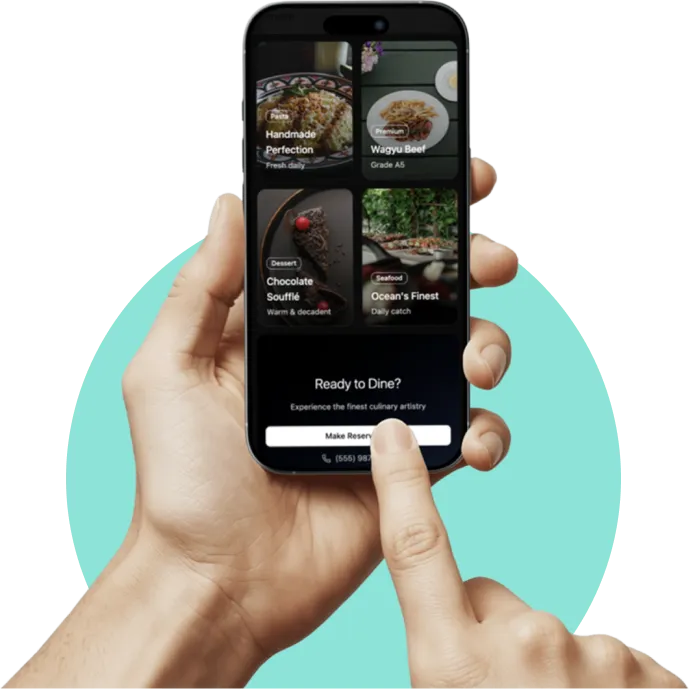

92% of restaurant searches happen on mobile devices - by people in their car, walking down the street, or at home comparing options. Your website performance is your handshake. A slow-loading site turns customers away. Your mobile experience is the single most important conversion factor because every second of hesitation sends customers to whoever loads faster.

Your Google Business Profile is often the first interaction customers have with your restaurant. Success requires more than basic setup: post at least 7 fresh photos weekly, respond to every review within 24 hours, complete all attribute tags like "outdoor seating," and publish weekly posts about specials or events. These actions signal to Google that you're actively engaged while giving customers the information they need to choose your restaurant.
Most restaurants upload PDF menus, but Google can't read them well. Create searchable menu pages where each category (breakfast, lunch, dinner) has its own page with specific dish names, ingredients, and local keywords naturally integrated. Add schema markup so Google can display your dishes in rich results. Include location-specific content that speaks to your actual customers, like "15-Minute Business Lunch Options Downtown" to match how people actually search.
Citations are mentions of your restaurant's Name, Address, and Phone number (NAP) across the web. Consistency is critical: if your Google listing says "123 Main St" but Yelp says "123 Main Street" and your website says "123 Main St, Suite A," Google sees confusion. Pick ONE format and use it everywhere: Google Business Profile, Yelp, TripAdvisor, OpenTable, local directories, and food delivery platforms. Our restaurant SEO agency audits and fixes these inconsistencies because even small variations can dilute your ranking power.
Reviews are the single most influential factor in local restaurant SEO. The quantity, recency, and response rate all matter. Ask for reviews 24-72 hours after a great meal when customers are still excited. For negative reviews, respond within 24 hours: acknowledge the specific issue, take responsibility, offer a solution, and move the conversation offline. This shows accountability to future customers and signals to Google that you're actively engaged with your community.
Social media creates a discovery engine that feeds back into your SEO for restaurants strategy. Balance your content: 40% behind-the-scenes (prep work, staff spotlights), 30% customer experience (user-generated content, review highlights), 20% educational (ingredient sourcing, preparation techniques), and 10% promotional (specials, events). Keep your NAP information identical across all platforms, and encourage customers to tag your location in their posts. These tags become mini-citations that reinforce your geographic relevance to Google.
Restaurants that dominate local SEO become community resources, not just food sellers. Create neighborhood guides, event-based content like "Where to Eat Before the Festival," seasonal local content about patios or outdoor dining, and partnership features with local farmers or breweries. Google's algorithm prioritizes local relevance and expertise. When you create content about your neighborhood, you signal that you're not just in this community but part of it.
Paid advertising complements your organic SEO strategy. Use it for new restaurant launches, slow nights (target local users with specials), event-based pushes (geo-target festival attendees), and seasonal promotions. Test messages through paid ads, then incorporate winning language into your organic SEO content. Most restaurants see significant results with targeted local ads when combined with solid SEO for cafes fundamentals. Paid ads teach you what works; SEO makes it sustainable.
Your SEO strategy should connect with all marketing efforts. Your SEO feeds your email list, email campaigns drive social engagement, and social proof improves search rankings. For example: a blog post about date night dishes leads to an email campaign, gets promoted on social media, drives website traffic, and ultimately boosts SEO rankings. At Lahav Media, we create integrated systems where every marketing effort amplifies the others rather than operating in isolation.


53% of mobile users abandon sites taking longer than 3 seconds to load. Your main content (menu, location, phone number) should load in under 2.5 seconds, with instant response when someone taps "call" or "directions." We compress images, implement lazy loading, remove unnecessary scripts, and use CDNs. Under stress, users scan for three things: can they call now, where are you located, and what do you serve.
Backlinks are votes of confidence. When local news or food bloggers link to your restaurant, Google sees you as community-relevant. Focus on genuine relationships: local food bloggers, news coverage for new features or community involvement, Chamber of Commerce listings, event partnerships, and supplier features. Build relationships by hosting tasting events and participating in community activities rather than buying cheap link packages.
If you have multiple locations, each needs its own dedicated landing page with unique NAP information, location-specific content, neighborhood context, location-specific hours, local reviews and photos, embedded Google Maps, and local schema markup. Avoid duplicate content by creating genuinely unique content for each location with local photos, neighborhood descriptions, and location-specific menu items or specials.

Focus on metrics that directly impact revenue: Google Business Profile actions (calls, directions, website clicks), "near me" keyword rankings, local organic traffic from your delivery radius, conversion metrics (online reservations, phone calls, orders, email signups), and review velocity. We create custom dashboards showing week-over-week performance, month-over-month trends, and ROI on your SEO investment without fluff.
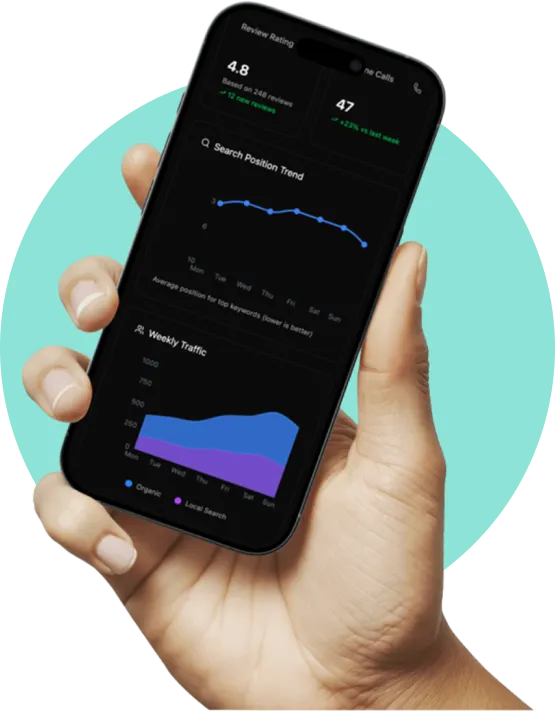

Essential tools include Google Business Profile Insights (free analytics), Google Analytics 4 (conversion tracking), Google Search Console (search query insights), SEMrush/Ahrefs (keyword rankings and competitor analysis), BrightLocal (local citation tracking), and CallRail (phone call tracking). These tools support your strategy by showing what's working so you can optimize and improve results.
"I think the main reason I recommend LahavMedia, is if YOU ARE READY to GROW YOUR BUSINESS. The LahavMedia team doesn’t just help sustain and make small changes, the team is built for growth and expansion. They Understand and Expand Your Business. having LahavMedia going deeper and creating a plan for you is the way to go."

"Before working with Lahav Media, we were barely visible online. Within four months, our Google rankings jumped and we started getting 2-4 reservation calls daily from people finding us on search. Our weeknight tables are finally full! Best investment we've made for our restaurant."

“LahavMedia helped us grow our revenue by 108% in 9 months, our traffic has doubled and our conversion rate incread by 38%”

“Before we started with LahavMedia we were in a difficult spot from a previous marketing company that was not getting us the leads that we needed. There was no comprehensive agenda to help us get to the next level and they generally seemed apathetic and unsuccessful.”

We own and operate a restaurant franchise, so we understand the daily demands of running a restaurant. Our track record includes 47 restaurant and cafe clients across the US, an average 67% increase in "near me" search visibility within 6 months, $2.3M in trackable revenue generated in 2025, and a 4.8/5 client satisfaction rating. We're a restaurant SEO agency that understands your industry inside and out.
Every restaurant gets a custom strategy because each has unique needs. Fast-casual spots need morning "near me" dominance and mobile speed. Fine dining requires sophisticated content and special occasion visibility. Family-owned restaurants emphasize story and community. Your strategy includes competitive analysis, keyword mapping, content calendar, technical roadmap, and local link building. No two restaurants get the same plan because no two face the same challenges.
We track what matters: phone calls from Google, direction requests, website conversions (online orders, reservations, email signups), and revenue attribution. You get transparent monthly reporting with week-by-week performance trends, campaign revenue impact, budget allocation, and what's working. If something isn't working, we tell you immediately and pivot fast. Our guarantee: if we don't improve your local search visibility and drive measurable results within 90 days, we'll refund your investment.
SEO requires ongoing optimization as Google's algorithm updates constantly and competitors actively try to outrank you. We provide monthly optimization (fresh Google Business Profile posts, review response, content updates, technical monitoring, keyword adjustments), quarterly strategy reviews (performance analysis, competitive updates, strategy adjustments), and unlimited communication with direct access to your account manager. We're an extension of your team, providing responsive, proactive support when you need it.

You'll start seeing initial improvements within 4-6 weeks, like increased Google Business Profile views, more direction requests, and your first ranking improvements. Meaningful results (consistent first-page rankings, noticeable increase in walk-ins and reservations) typically appear within 3-6 months of consistent SEO work. Google doesn't trust new signals immediately, so consistency over time builds trust and rankings. Variables affecting timeline include competition level, current SEO state, industry competition, and your commitment level. Restaurants that actively participate see faster results.
Absolutely. Big chains have bigger budgets but are generic (can't speak to local neighborhoods), slow (corporate approval processes), impersonal (faceless corporation versus community member), and cookie-cutter (identical locations). You have advantages: target hyper-local searches like "Italian restaurant Heights neighborhood," build review velocity that shows momentum, create authentic local content about your neighborhood and suppliers, build personal relationships with local food bloggers, and adapt quickly when search trends shift. In local SEO, authenticity and community connection beat generic corporate presence every time.
You can handle basics like claiming your Google Business Profile, posting photos, responding to reviews, and social media updates. However, most restaurant owners struggle with technical SEO (website speed optimization, schema markup, mobile performance), advanced keyword research, strategic content creation, citation building, competitive analysis, and link building. Effective restaurant SEO requires 10-15 hours weekly—time better spent running your restaurant. Many restaurant owners use a hybrid approach: handling basics themselves while outsourcing technical work to professionals.
Absolutely, when implemented strategically. Professional SEO for restaurants and cafes delivers measurable ROI. Initial months build foundation, followed by improved rankings and increased organic traffic, then consistent first-page rankings. Unlike paid ads that stop when you stop paying, SEO builds cumulative value—rankings continue generating customers months and years later without additional investment. You're buying perpetual lead generation (customers finding you 24/7 without ongoing ad spend), brand credibility (high rankings signal trust), competitive protection, and reduced ad dependency with gradually decreasing cost per acquisition.Absolutely. Local SEO delivers one of the highest returns on investment for restaurants because it targets customers actively searching for dining options in your area. Studies show that 76% of people who search for a local business on their phone visit within 24 hours, and 78% of local mobile searches result in offline purchases.
Unlike paid advertising that stops working when you stop paying, Local SEO builds long-term visibility that continues driving customers to your restaurant without ongoing ad costs.
Google Business Profile is one crucial piece of the local SEO puzzle, not the whole puzzle. Your Google Business Profile is your storefront window—what people see first when searching, including basic info, photos, menu, reviews, and ability to show up in Google Maps pack. Local SEO for restaurants is your entire online presence—everything making you discoverable, including optimized Google Business Profile, restaurant website performance, presence on Yelp and TripAdvisor, online reviews across platforms, local content, backlinks from local media, social media, citations, and schema markup. You need both—neglecting either leaves money on the table.
Investment depends on your situation, competition, and goals. Options range from DIY approaches (handling work yourself with basic tools) to basic professional services (Google Business Profile optimization, review monitoring, website optimization, content updates), comprehensive packages (advanced technical SEO, multiple content pieces, strategic link building, competitive analysis), and enterprise solutions (custom campaigns, advanced intelligence, dedicated teams). SEO agencies for restaurants also offer project-based work like audits, website redesigns, citation cleanup, and content strategy development. Cost factors include market competition, current SEO state, scope, and agency expertise. Quality local SEO for restaurants requires investment but delivers strong ROI through increased visibility and customer acquisition.