Your practice delivers excellent care, but visibility determines who patients contact first. In the critical 8 seconds between a search and a phone call, patients evaluate trustworthiness, proximity, and proof. Most make their decision before scrolling past the top results. SEO services for doctors optimize this exact moment, ensuring the right patients find you when they're ready to choose a provider.

When patients need a doctor, they don't browse. They act. Urgent searches favor speed (paid ads), while time-sensitive searches involve evaluating trust signals, reviews, and proximity. This is where SEO for doctors delivers the highest ROI. Patients look for four key signals: experience (evidence you've treated cases like theirs), expertise (clear answers about visits and diagnosis), authority (consistent presence across Maps and directories), and trust (transparent communication confirmed by reviews). A strong SEO agency for doctors builds this entire stack, not just traffic.
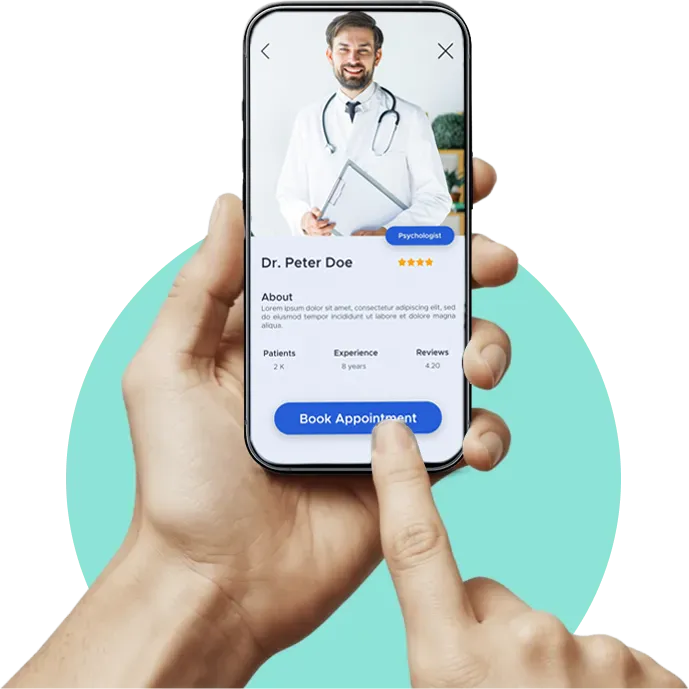

Almost all healthcare searches happen on mobile where decisions occur within the first screen view. Your entire practice presence consolidates into what patients see first. Critical information must be immediately accessible: specialty, location with one-tap call functionality, insurance acceptance, new patient availability, and social proof. Every second of hesitation sends patients to whoever loads faster. Optimizing for mobile behavior improves both user experience and conversion rates.

Your Google Business Profile, website, and reviews form a unified signal system. SEO companies for doctors build this through experience signals (local case references, neighborhood context), expertise signals (clear service page guidance, pre-call answers about insurance), authority signals (consistent presence across Healthgrades, Zocdoc, Vitals), and trust signals (transparent wait times, step-by-step patient process, proof through reviews).
Search is evolving fast. When patients ask ChatGPT "best pediatrician near me," query Google AI Overviews for "doctor who takes [insurance] in [city]," or use Grok for healthcare recommendations, AI platforms summarize answers from multiple sources. If your practice isn't structured for AI extraction, you're invisible in these results. An experienced SEO company for doctors implements LocalBusiness Schema (specialty, insurance, hours), FAQ Schema (common patient questions for voice search), and MedicalProcedure Schema (treatment pages optimized for featured snippets and AI interpretation), ensuring your practice is recommended across Google, ChatGPT, AI Overviews, and beyond.
Technical performance affects whether patients stay long enough to call. We target mobile LCP below 2.5 seconds, optimize for real-world network conditions, and prioritize above-the-fold appointment CTAs. Speed improvements are validated through patient behavior, not just metrics. Ongoing maintenance includes crawl error monitoring, broken links, mobile usability, and rendering issues. Technical SEO for medical practices requires continuous maintenance.


Generic health content doesn't rank locally. Content tied to your city and neighborhood context does. Effective examples include "Managing Spring Allergies in [City]," "Sports Injury Care Near [High School]," and "Pediatric Care for [Neighborhood] Families." Each piece should include local problem context, your treatment approach, patient expectations, and clear next steps. Location-based content improves rankings and builds relevance with patients who recognize their community.
Search engines treat your practice as a single entity. Inconsistent NAP details fragment that entity, hurting rankings. Use the exact same business name, address format, phone number, and hours across your website, Google Business Profile, medical directories (Healthgrades, Zocdoc, Vitals), insurance databases, and social profiles. Even small variations like "Street" vs. "St." create ambiguity. SEO services for doctors include NAP audits to fix inconsistencies.
Patients increasingly find providers through Google AI Overviews, ChatGPT, and voice search. Not just traditional results. If your practice isn't structured for AI extraction, you're invisible in these answers. Proper MedicalBusiness Schema, FAQ Schema, and MedicalProcedure Schema ensure your practice is accurately represented across every search surface, from featured snippets to AI-generated recommendations. An experienced SEO company for doctors maintains this layer continuously alongside GBP changes and service updates.

Backlinks from relevant local sources tell search engines your practice is an established part of the local healthcare ecosystem. High-value sources include local hospital affiliations, medical directories (Healthgrades, Zocdoc, WebMD), local health news coverage, community health resources, and insurance provider directories. Quality over quantity: one link from your city's hospital network carries more weight than 100 directory spam links. A strategic SEO agency for doctors builds backlinks that reinforce local medical authority, not just link volume.
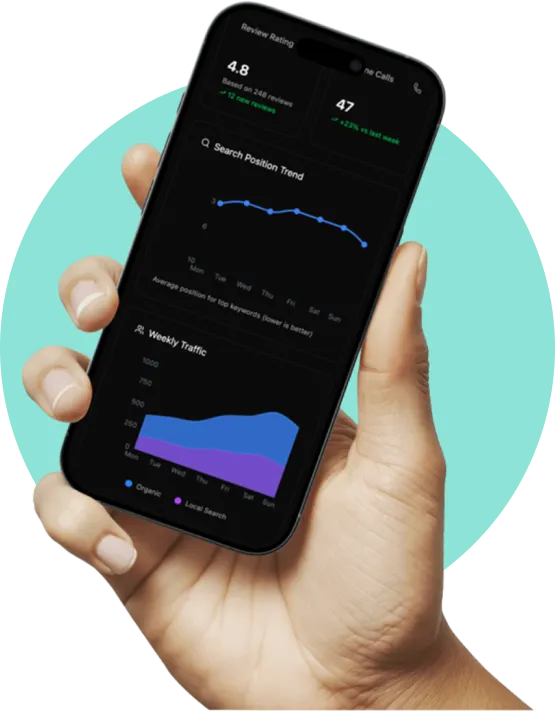

Local citations are mentions of your practice across the web that reinforce your authority in your service area. Priority sources include healthcare platforms (Healthgrades, Zocdoc, Vitals, RateMDs), general directories (Google Business Profile, Bing Places, Apple Maps), and insurance networks. Complete your profile with consistent NAP, accurate specialty descriptions, hours, insurance, and photos where supported. Citations work cumulatively. The more aligned mentions across trusted sources, the more confident search engines become in ranking you.
"I think the main reason I recommend LahavMedia, is if YOU ARE READY to GROW YOUR BUSINESS. The LahavMedia team doesn’t just help sustain and make small changes, the team is built for growth and expansion. They Understand and Expand Your Business. having LahavMedia going deeper and creating a plan for you is the way to go."

"Before working with Lahav Media, we were barely visible online. Within four months, our Google rankings jumped and we started getting 2-4 reservation calls daily from people finding us on search. Our weeknight tables are finally full! Best investment we've made for our restaurant."

“LahavMedia helped us grow our revenue by 108% in 9 months, our traffic has doubled and our conversion rate incread by 38%”

“Before we started with LahavMedia we were in a difficult spot from a previous marketing company that was not getting us the leads that we needed. There was no comprehensive agenda to help us get to the next level and they generally seemed apathetic and unsuccessful.”

75%+ of healthcare searches happen on mobile phones. Mobile optimization includes responsive design, one-tap phone buttons, large readable text, touch-friendly forms, fast load times, and no horizontal scrolling. Patients call directly from search results, complete forms on phones (keep them short), and expect critical info above the fold with maps integration for directions. A mobile-optimized site is the baseline for medical practice SEO in 2025.
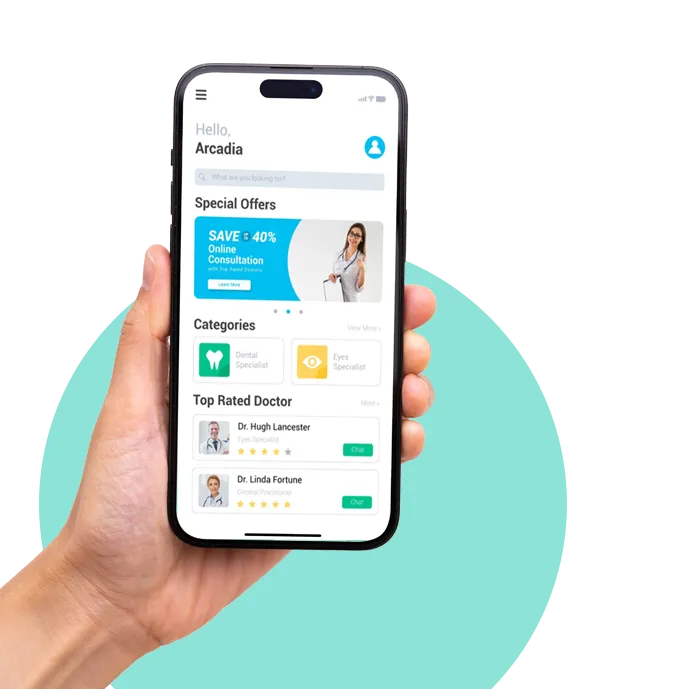
Page speed impacts search rankings, patient patience, and conversion rates. Key metrics: LCP (main content loads under 2.5 seconds), FID (responds to clicks under 100ms), and CLS (content doesn't shift while loading). Common problems include oversized images, heavy booking widgets, excessive scripts, and unoptimized videos. Use Google PageSpeed Insights to audit your site. An SEO company for doctors implements speed fixes and monitors performance continuously.
"Independent practices face unique opportunities for local dominance. Your advantages include personalized care positioning, neighborhood expertise, appointment accessibility, and specialized focus. Local SEO amplifies these because hospital systems optimize for brand terms not neighborhood searches, struggle with NAP consistency across locations, and move slower on content and reviews. (Hospital networks face the same multi-location SEO challenges as franchises and independent practices can exploit these weaknesses.)
Specialty practices have smaller search volume but higher patient value. Strategy includes targeting long-tail condition searches ("pediatric allergist in [city]"), creating condition-specific content, and building authority through symptom-focused content. Examples: ENT practices target "chronic sinusitis treatment [city]," dermatologists focus on "acne treatment for adults [city]," cardiologists optimize for "heart disease prevention [city]." Specialized SEO for doctors means understanding the patient journey for specific conditions.
Real practices have seen measurable gains through local SEO. A suburban family practice hit page 1 in 4 months, earning 340% more map directions and 180% more patient inquiries. A pediatric practice recovered from an algorithm update in 3 months with a 290% traffic increase via technical fixes and schema. A dermatology clinic ranked #1 for 8 condition terms and cut acquisition costs by 70%. The common thread: treating local search as patient acquisition, not just rankings.
We understand how patients make healthcare decisions under stress, time pressure, and information overload. Our medical SEO expertise includes HIPAA compliance, medical terminology optimization, healthcare reputation management, insurance integration, and multi-location coordination. We've helped family medicine practices, pediatric clinics, specialty practices (cardiology, dermatology, ENT, orthopedics), multi-provider groups, urgent care centers, and concierge medicine achieve page 1 rankings and sustained patient growth.
We don't report on vanity metrics. Every month you receive a clear performance summary connecting SEO activity to real business outcomes: new patient inquiries, call volume from organic search, Google Maps actions, and ranking movement for your highest-value terms. You always know what's working, what's being tested, and what's next. Our reporting is built for practice owners, not SEO specialists.
Every practice is different: solo versus multi-provider, primary care versus specialty, new versus established, insurance-based versus cash-pay, urban versus suburban/rural. Solo practitioners and small practices need specialized small business SEO strategies that don't waste budget on enterprise-level tactics. We don't sell packages. We build custom patient acquisition systems using local SEO as the foundation. Whether you're a solo family practice or specialty group expanding to multiple locations, Lahav Media delivers SEO for doctors that translates to real patient growth.
You get a dedicated SEO team that understands the healthcare industry, not a generalist account manager juggling 50 clients. We stay current on Google algorithm changes, AI search evolution, and healthcare-specific ranking factors so your practice maintains visibility as search continues to evolve. From strategy to execution, your team is accountable for patient growth, not just rankings.

Most practices see results on a progressive timeline: technical fixes, GBP optimization, and initial ranking movement occur within 1-2 months; measurable traffic increases and review velocity impact become visible in 3-4 months; and sustained top rankings with consistent new patient flow from organic search typically establish after 6+ months. SEO is not instant, but it's cumulative. Unlike ads which stop when budget stops, SEO builds equity as rankings and authority compound over time. Factors that affect timeline include current site condition (starting from scratch versus fixing existing issues), competition level in your specialty and city, review count and velocity, content development speed, and technical issues requiring resolution. Most practices see meaningful patient increases within 90-120 days with proper execution.
Measurable outcomes include page 1 rankings for primary specialty and city terms, 200-400% increase in organic website visits (typical for competitive markets), more phone calls, form submissions, and direction requests from Google Maps, better-matched patients who chose you specifically rather than just "any doctor nearby," and consistent new patient flow independent of ad spend. Beyond Google, we also optimize your practice to appear in AI-generated recommendations across ChatGPT, Google AI Overviews, Grok, and other AI platforms ensuring your practice is visible wherever patients are searching in 2025. Business impact includes reduced cost per patient acquisition (SEO compounds while ads reset monthly), higher patient lifetime value (patients who research choose practices they stay with), better appointment scheduling control through predictable inquiry volume, and increased leverage when negotiating with insurance through patient demand proof. SEO services for doctors should be measured by new patient volume and quality, not just rankings. Rankings are the means, patients are the outcome.
Yes, and it is becoming one of the most important visibility opportunities for medical practices in 2025. Google AI Overviews appear at the very top of search results and directly answer patient questions like "best family doctor near me" or "what should I look for in a pediatrician in [city]" before users even see traditional listings. To appear in these results, your practice needs content structured around the specific questions patients ask, clear and concise answer blocks on your service pages, properly implemented FAQ Schema and MedicalBusiness Schema, and consistent entity signals across your website, Google Business Profile, and medical directories. Practices that invest in SEO for doctors with AI visibility as a core component are the ones getting recommended before patients ever scroll to the traditional blue links. At Lahav Media, AI Overview optimization is built into every strategy we build, not treated as an add-on.
Professional SEO services typically cost $2,000-5,000 per month depending on market, competition, and scope, while a DIY approach requires 15-20 hours per week representing significant opportunity cost. Typical returns include new patient acquisition cost via SEO of $50-150 per patient after a 6-month ramp, compared to $200-600 per patient via ongoing ads, with patient lifetime value ranging from $2,000-15,000+ depending on specialty. If SEO generates just 3-5 new patients per month, it pays for itself, though most practices see 10-30+ new patients monthly from local SEO once established. Long-term value is compelling: SEO builds equity where rankings persist even if you pause investment, while ads deliver zero residual value (stop paying and you disappear immediately). SEO becomes more cost-effective over time with initial investment and declining marginal cost, while ads become more expensive over time due to increasing competition and rising CPCs. For practices planning to operate 5+ years in the same location, local SEO is one of the highest-ROI investments available.